
About
Author Bio, Resume/CVLatest Posts
Protected: Updated TOBD 4/15/2021
Password Protected
To view this protected post, enter the password below:
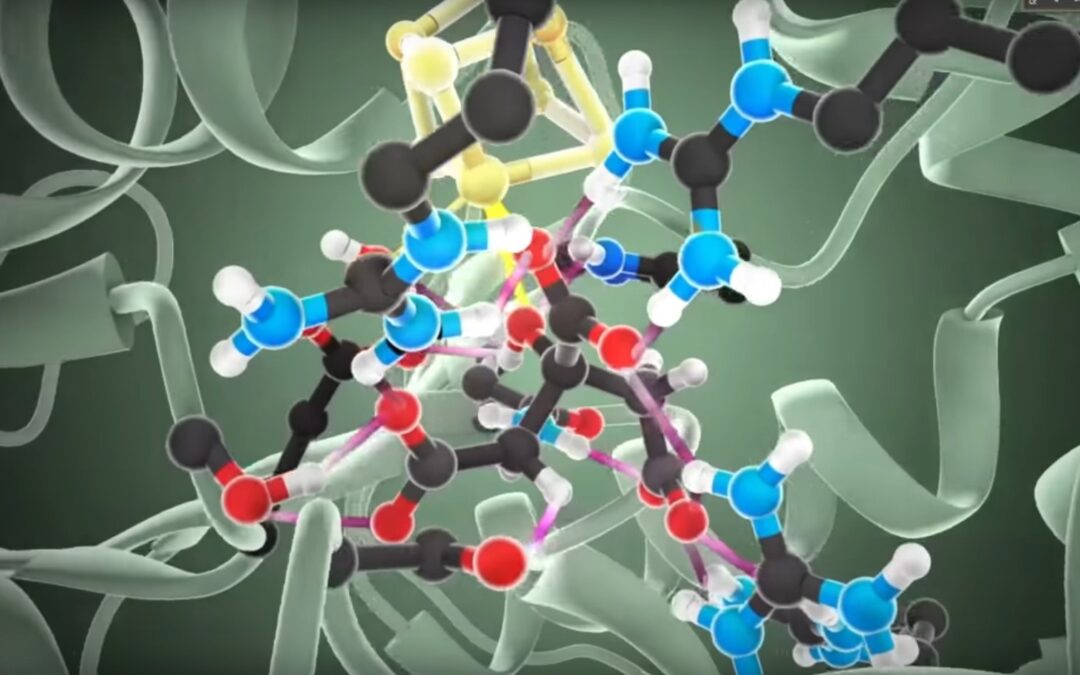
Protected: An Enzyme Mechanism Theory
Password Protected
To view this protected post, enter the password below:
Protected: Machine Theory Truth Test
Password Protected
To view this protected post, enter the password below:
Protected: An ID Falsification Challenge
Password Protected
To view this protected post, enter the password below:
Machine Design: Top Down – Bottom Up
Post Under Construction Machines are much harder to design and implement than static entities. This post will explain the creation process and hopefully provide a sense of the level of complexity and coherence that is involved.
Author Bio
 Mike grew up on a ranch/farm in Eastern Oregon that raised cattle and sheep, and farmed wheat and hay. Electricity arrived when he was 10 years old. The phone number was two longs and a short. As a result, he learned a lot about “practical” biology, skills operating, maintaining, and repairing machinery, animal husbandry, and meat “hoof-to-table” skills. During this time, he also developed an interest in astronomy, built an observation beehive, obtained an amateur radio license (W7ZTQ), and learned to fly.
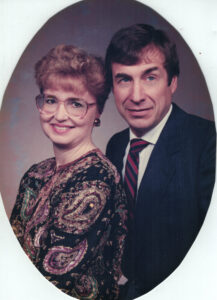
He attended college (Oregon State University) with a focus on control theory. During this time, he and Karen in the picture got married. He graduated at a time when engineers were in high demand and ended up with numerous unsolicited offers, including from Bell Labs. However, he chose to go to Honeywell (“first in control” motto), working on the Apollo program and ending up in Honeywell’s research department. After the Apollo contract was completed, Honeywell planned to relocate its research department to St. Petersburg, FL. Not wanting to move further East, Mike accepted a position at what became Sunstrand, Data Control Division, in Redmond, WA. He ended up being the chief electronics and control engineer for the accelerometer product line, which grew from less than $1 million per year to over $20 million per year during his tenure. He had worked his way out of a job (1977) because of his invention of a concept that made the design universal by isolating the servo stability from the accelerometer’s application by use of a custom semiconductor chip. In addition, the mechanical design was superior to any other device in its class (rugged, high-accuracy navigation/instrumentation applications). It was later acquired by Honeywell and paired with their ring laser gyroscope to create the (claimed) best navigation platform, which remains in use to this day, nearly 50 years later, utilizing the same electronics. Over 3 million of these accelerometers have been sold since the turn of the century, used for commercial and military aircraft, submarines, missiles, spacecraft, and for guided downhole gas and oil drilling applications.
Mike was a baptized Christian before college, but learned that the Miller-Urey experiments explained how life’s molecules were formed, and Darwinism explained the rest regarding our existence in college. Although skeptical, he went through life not giving much thought to origins until he attended Steve Meyer’s lecture on “Signature in the Cell,” where Steve played a video that showed the machinery at work that converts DNA into protein molecules. He immediately realized that he was watching machines at work, not chemistry. This realization caused him to think more carefully about what machines were, because it wasn’t the mechanisms or technology if there were molecular machines. At this point, Mike joined the Discovery Institute’s (Steve Meyer was a founder of this organization) engineering group to answer this question, leading to a theory of machines (Machine Theory) described herein.
Since retiring, Mike has devoted his additional time and energy to causes and issues that he feels are essential, including helping those in need, supporting and training our youth (who are our hope for the future), and addressing the issues outlined on this site. I believe my profession has been helpful because an engineer learns early on that you cannot succeed if you don’t follow the laws of physics, so step number one is to understand these laws. Not all professions and systems are so harsh; one or systems can get by “going down the wrong road” for long periods of time before something breaks. The three issues this site addresses fall into this category. And it doesn’t take a rocket scientist to understand the issues; they are all common sense if one knows the facts involved.
Interestingly, much theory and technology my career has involved apply to the topics addressed on this website, including feedback control, process control systems, information theory, computer hardware, and software with associated languages and protocols, sensors, actuators, neural networks, thermodynamics, and chemistry. Future posts will address these connections.
Author Resume/CV
Education:
BSEE, Oregon State University, 1964
Graduate Studies, University of Minnesota, 1965/66, Control Theory
1969 – Professional Engineer, State of Washington
EIT (Engineer In Training) Test taken at OSU before graduation. PET (Professional Engineering Test) taken at UW in 1969 (5 years EIT work prerequisite)
1964-1966 Honeywell Aero Division, Minneapolis, MN
Titles: Design/Evaluation Engineer, Research Engineer – Honeywell Aero Division, Minneapolis, MN
Responsibilities: Design Engineering, Apollo Stabilization & Control Electronics, later NASA proposal for (what became Hubble Telescope) stabilization & pointing system
Accomplishments: Work resulted in the redesign of the Control Electronics and 12 Patent Applications
1966-1977 Sunstrand Data Control, Redmond, WA
Responsibilities: Principal Engineer/Section Mgr, Transducer Division
Accomplishments: Applications engineering that grew the company 20X during tenure and became the leading supplier in our market niche, guidance and control for military and industrial applications. Improved electronics designs; implemented a monolithic chip for the Q-Flex product line that made the design “universal,” that is, miniaturized electronics that would work for all applications, all customizations being external, with improved performance in terms of stability, repeatability, and environmental effects. This design has withstood the test of time and is now owned by Honeywell. It has increased production capacity and has sold more than 3 million units, utilizing the same electronics I designed 50 years ago. The military primarily uses these accelerometers for aircraft, missiles, submarines, and other applications, as well as by the aircraft industry and the guided downhole drilling sector of the gas and oil industry. I “designed” myself out of a job, as I knew this challenge was met, and the company did not have another one for me.
Numerous patents.
1977-1981
Quinton Instruments, Seattle, WA.
Responsibilities: VP -Engineering, Upgrade treadmills and develop ECG Monitoring machines for Heart Disease Stress Testing
Accomplishments: The business plan for the company was to develop a “turn-key” Heart Disease stress test designed by Dr. Robert Bruce, UW, then to go public to raise the capital to put the product into production and to develop a sales force to promulgate the product to the medical industry. My job was to assemble an engineering team and oversee the work, which I completed in 6 years. This involved creating algorithms to analyze the data gathered, which I used SRI (Stanford Research Institute) to help with. I also invented QUICK-Prep, a machine to automate the attachment of electrodes with minimal discomfort. Due to other disruptions, I was appointed to also act as the Operations Manager for the company for 7 months. Instead of going public, the company was sold to A,H. Robins.
1981-1986 GLI Corporation, Woodinville, WA (Owned by Baker Mining)
V.P. Engineering
Responsibilities: Engineering Management/New Product Planning/Development
Accomplishments: After conducting a market survey, we designed & developed the Vehicle Management System product line. We invented coolant and oil Level sensors. Organized Dept. Developed drilling products.
Participated in the sale to Caterpillar.
1986-1987 Vehicle Systems Corporation (VSC, Owned by Caterpillar)
V.P. Engineering
Responsibilities: Engineering Management/New Product Planning/Development
Accomplishments: Invented Analog Oil Level Sensor
1988 – 2010 Vehicle Monitor Corporation, Redmond, WA
Founder & President
Management, Engineering, Strategic Alliances, Business Development
Accomplishments:
Conducted ABS Field tests for NHTSA, resulting in present rulings – 3 projects
Developed an innovative Current Signature Analysis Testing Technique
Grew VMC into the leading Heavy Equipment Testing Company
Helped Caterpillar develop and implement the “Caterpillar Production System” patterned after the Toyoda Production System
Provided the Caterpillar factory production station test system for 90% of the heavy equipment products
Developed DVEeLink™ a Driver-Vehicle-Enterprise communication system
Developed SmartDisplay™-A Dash-Mounted Display used in Mack & ITEC Trucks
Contributed several concepts to T&B Vehicle Data Bus Technology
2010 – Present Retired
Activities: Rotary, First Robotics advisor, BSA First-One participant, Adult Education Teacher Bellevue College, Discovery Engineering Research Group
Professional Engineering Work (Ivanco Technology LLC):
Tri-Tec Manufacturing: Redesign ship valves to withstand elevated vibration and to implement databus technology.
WISEerg: Designed the prototype system that implemented the biological process, including the mechanics and electronic controls.
Space Needle: Designed a “lighting energy bypass” to divert the rotating (1 RPH) “lighting rod” energy at the top of the Space Needle around a faster rotating camera (see at Space Needle Panocam | Space Needle)
Other miscellaneous approval inspections and certifications.
Prior to Retirement Activities:
Boy Scout Troupe Leader
Volunteer BSA Learning For Life Program
Various Trade Organizations, SAE T&B Control & Communications Task Force, many years
Mike Van Schoiack Résumé
First One Robotics Mentor, Newport HS, Sammamish HS
Married with child, enjoy sailing, jogging, traveling, skiing, technology, reading, Amateur Radio (W7ZTQ),